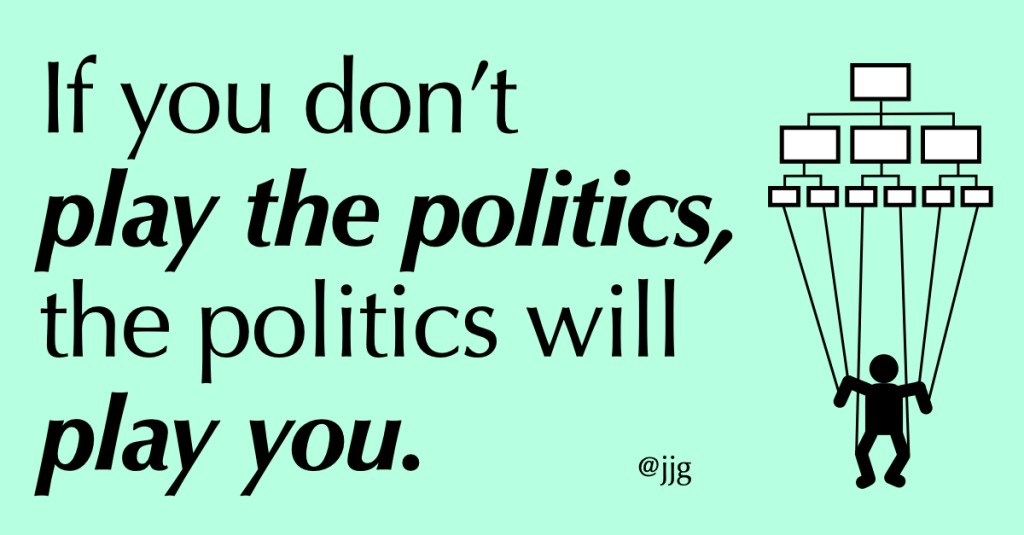
Politics. The very word conjures a whole host of negative associations: hidden agendas, backroom deals, manipulation and deceit. It’s no wonder so many senior leaders don’t want to see themselves as political people, even at the executive level. One of the worst things you can say about a decision is that it was “politically motivated”.
And it’s true. If you want to get some shady business done inside your company, politics is your best tool for accomplishing it. But politics is only dirty if you play it dirty. No successful executive has reached their goals without politics. They just might not have described it that way at the time.
What we derisively call politics is often just the use (or misuse) of interpersonal relationships to influence decisions. When misused, this influence creates toxic games of duplicity and powermongering. But these same tools of influence are essential for staying aligned with your fellow leaders—especially if you’re trying to drive organizational change.
People with power grant influence to those whose intentions are clearly aligned with their own. Clarifying those intentions and creating alignment around them is the foundation for a trusting relationship and a genuine partnership. Note that alignment is not necessarily agreement. We don’t have to have the same vision as our partners. They just have to be compatible in aims and outcomes.
Politics is not just about advancing your own agenda. It also entails staying aware of all the other agendas in play, and balancing where you invest in building your influence accordingly. It might feel at first like indulging in office gossip, but you’re actually gathering critical intelligence that you’ll need not just to thrive, but also perhaps survive.
Because most importantly, politics will determine who’s on your side when the going gets tough. No amount of authority “on paper” will counteract the influence of a highly politically aligned leader when your boss has to decide whether your team or your peer’s gets the axe.
I hear many leaders speak with a touch of envy and resentment about highly political leaders who “always seem to get what they want”. It feels like a cheat, a way to get around the real game of decision making. It’s not. It is the real game.
Too many leaders think they can succeed by “rising above” organizational politics. But there’s another word for that state of being above it all: disconnected. And if you stay up there, you just might find yourself floating right out of the organization.
 Jesse James Garrett